


NATURE AROUND ÄLLINGS SÖ
The lake got its nickname after the filming of Bamse Billedbog, where Ælling lives by the lake. However, we have many other duck families that also build nests here.
Rainwater from the area is collected in Ællings Sø and drained to Buresø and further to Roskilde Fjord, but in addition to its practical function, the lake also houses many animals.
The large willow trees are a species of many different willow trees and shrubs that have been part of Danish nature for many thousands of years - several of the willow species were among the earliest plants to immigrate to the Danish landscape when the ice disappeared after the last ice age.
Willow is one of the earliest flowering plants. That is why the willow flowers are one of the first places where it is possible to find food for the very first insects of spring. The willow flowers are also very generous towards the insects.
Create life around you with the flower mixture “Danish Wild Meadow”
27 wild Danish flowers – collected in Denmark. Suitable for ordinary, preferably slightly sandy soil.
Sowing time: From April to October
Plant height: 60 – 80 cm.
Flowering: April to September
Contents: Common yarrow, common yarrow, common goosewort, narrow-leaved bellflower, bluebell, nettle-leaved bellflower, cornflower, common knotweed, chicory, snakehead, tuberous meadowsweet, yellow sedge, prickly-leaved St. John's wort, bluebonnet, white oxeye, dog's tooth, tar clove, threadwort, marjoram, corn poppy, downy plantain, hollow-necked cowslip, common brown nettle, nodding limweed, dayflower, bladderwort, musk mallow.
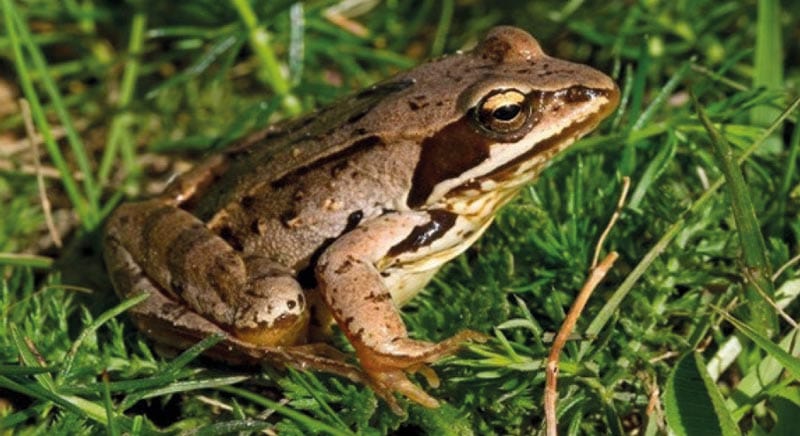
DID YOU KNOW!
When the eggs hatch after 10-14 days, the little tadpoles first stick to the egg, which they eat. After a few days they swim away and start eating algae and dead plants. They get legs within a month, and by the end of June they have turned into little frogs with lungs instead of gills. They are now predators instead of herbivores.
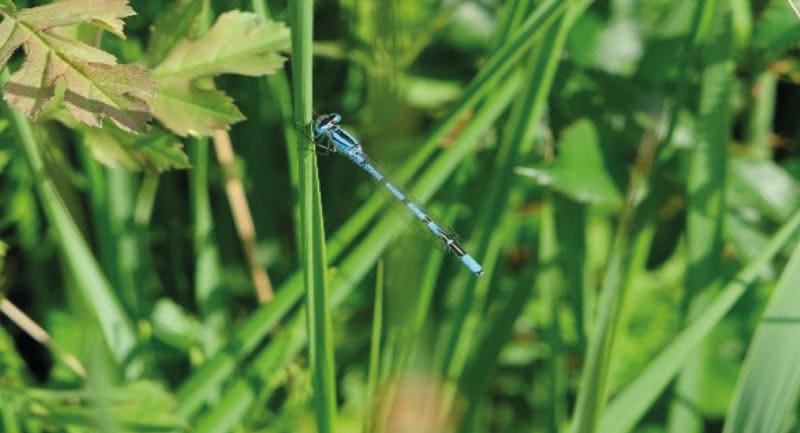
DID YOU KNOW!
The male is blue with black markings. The sides of the forebody are solid blue in the male and have a mushroom pattern on the second hindbody segment.
The female can be either yellow-green or blue with black markings.
Body length: 30-33 cm – Wingspan: 36-40 mm Flight time: Late May to early September
The pointed-nosed frog lives here in Ællings Sø, and it is actually deeper than you think and an obvious habitat for frogs and amphibians.
In selected areas we still mow the grass, but no pesticides or the like are used. When the dandelions stand beautifully in yellow, it actually benefits biodiversity. Its yellow flowers attract a lot of insects, and the insects attract many insectivorous animals, such as small birds.
It also works wonders underground, where the dandelion with its powerful root can break up hard and compacted soil. After the dandelion itself has withered away, other organisms, such as earthworms and microorganisms, can move in. Then other plants with finer and weaker roots can more easily penetrate the soil and establish themselves, thus creating more biodiversity.
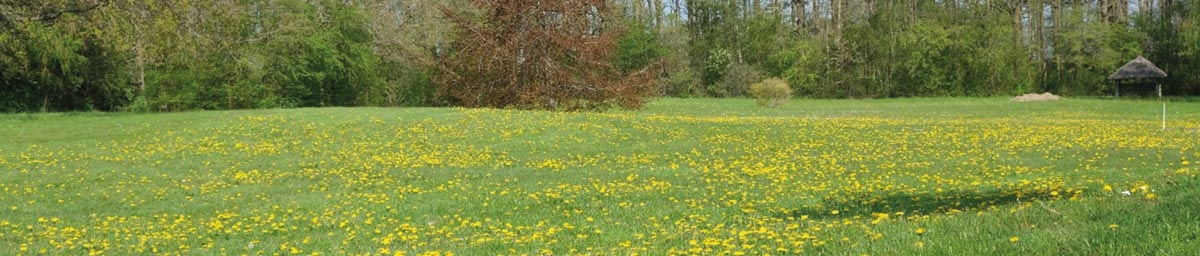
The lawns of the Metal School dressed in yellow.