

FOREST AND WILD BEES
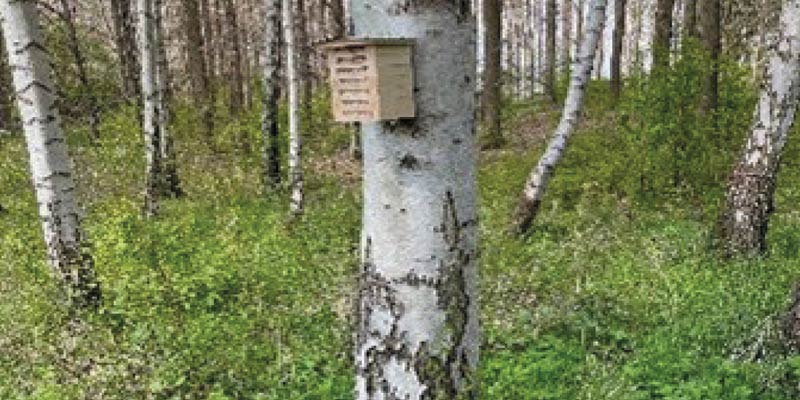
In the forest area surrounding the Metalskolen area, we are using fallen trees to create homes for nature's animals and insects. The forest consists of oak, beech and birch and is a habitat for squirrels, deer and game birds. In collaboration with Vild med Vilje, we have hung up bird boxes in 2023 to attract more species.
Boxes have been hung for, among others, starlings, redstarts and coots, and they were built in connection with Dansk Metal's family holiday for members and their children and grandchildren.
The common merganser is abundant in Northeast Zealand and therefore also resident in this area, but a rare visitor in the rest of Denmark. It is a diving duck that finds its food on the bottom of lakes and shallow fjords. It eats insects, snails, mussels, small fish and aquatic plants.
Did you know:
“It gets its name from the whistling sound produced by its wing beats.”


In collaboration with Plan Bi, we have initiated a project to attract more wild bees to the Metalskolen areas and for the same reason closed down our honey-producing hives. Unfortunately, the number of wild bees is constantly decreasing and in the long term this will have an impact on both us as humans and all animals in nature.
“Bee hotels are nice …but they can’t save our most endangered bee species.”
Professor Carsten Rahbek
But when it comes to understanding how wild solitary bees live, bee hotels are second to none, although don't think that helps the endangered species. They need one thing, and that is true wilderness.
Solitary bees
Solitary bees live alone and therefore have neither a queen nor workers. Each female builds her own nest. The cells are built from materials such as resin, soil and small pieces of leaves. In the cell, the bee places a lump of pollen - lays an egg and closes the cell and a new cell is started. The hatched larvae eat pollen and often overwinter here as prepupae in a cocoon.
Once the egg has been laid and has provisions to grow, the female has no further contact with the offspring.
This is the process you can follow in an apiary, and you are therefore welcome to pull out a "drawer".
Many of the solitary species only collect pollen from one or a few closely related plant families, making them incredibly vulnerable. Agricultural land and a lack of wildlife limit the range of plants and contribute to the extinction of wild bees.